An adult learning to sight-read is not walking the same path as a child learner, just later. They are walking a different path. Neuroplasticity continues throughout life, but the mode and efficiency of plasticity change with age. Accept that difference, build the training strategy around it, and adulthood becomes not a handicap but a different kind of strength.
This piece is about what adult learners — in their thirties, forties, fifties, and beyond — should know as they take up sight-reading.
🎼 How an Adult Brain Learns
An adult brain differs from a child brain in two ways. First, myelination is complete, which means established neural pathways are fast and stable. Second, the rate at which new pathways form is slower than in childhood. The trade-off: it takes more repetition to install a new pattern, but once installed, it doesn't degrade easily.
This asymmetry has direct implications for training design. Short, frequent sessions outperform long, infrequent ones — far more so than for younger learners. The adult brain may have the patience for an hour-long practice session, but neurologically that is not the efficient mode.
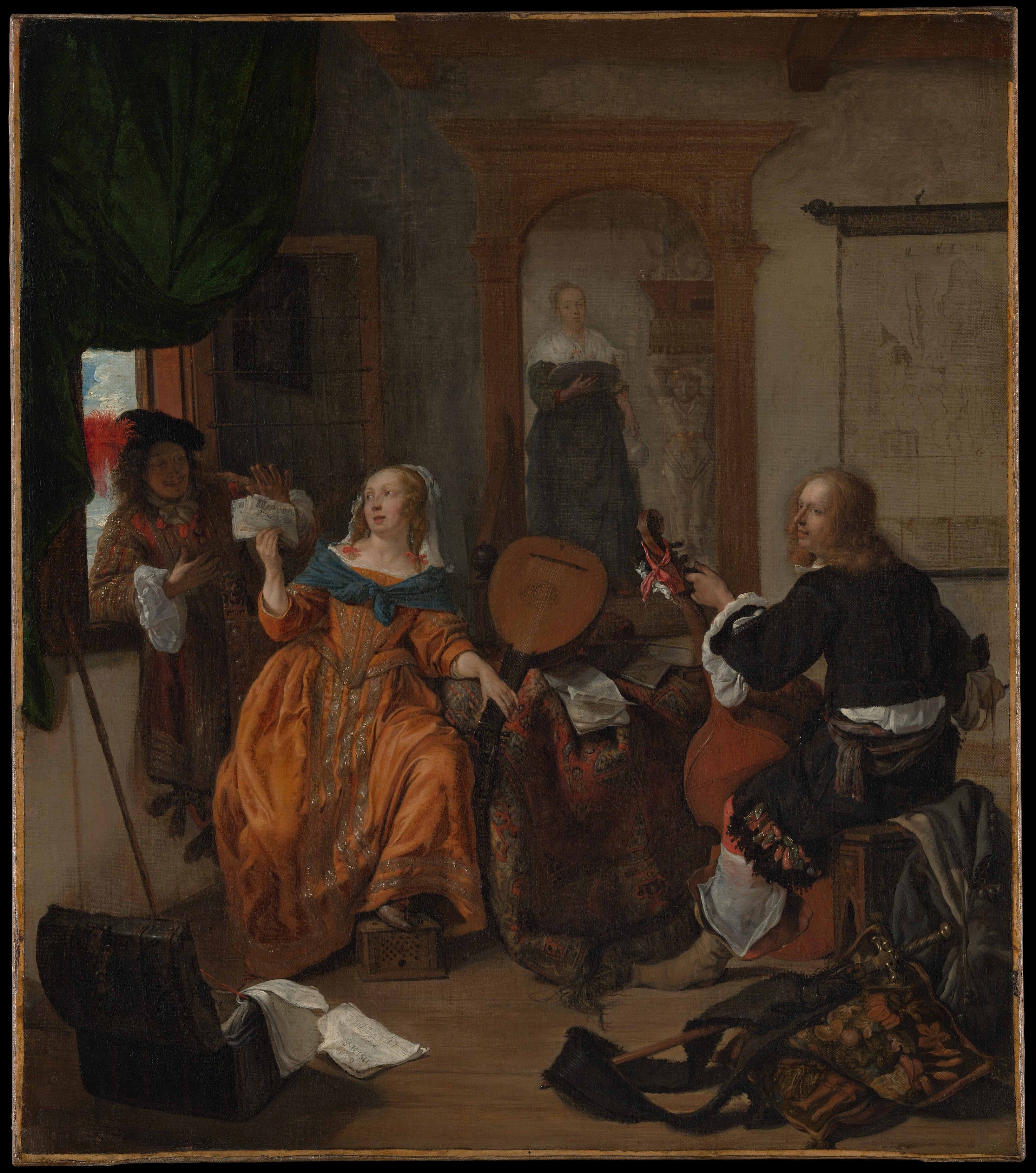 Figure 1: Gabriël Metsu, "A Musical Party" (1659), oil on canvas. The Metropolitan Museum of Art — Public Domain
💡 The Advantages Adults Have — Bugos et al. (2007)
Bugos and colleagues (2007) gave individualized piano lessons to adults aged 60 to 85 over six months. The experimental group showed measurable gains in executive function and working memory compared to controls — direct evidence that neuroplasticity remains active well into later life.
The more useful finding is what adults bring to learning that children do not. First, stronger self-awareness — adults can identify precisely where they are stuck. Children often don't know what they don't know and pass over it. Second, developed metacognition — adults can consciously adjust their learning strategy as they go. Third, deeper musical context — knowledge of genre, structure, history. This means adults convert notes into musical meaning faster, even when raw decoding is slower.
Summarized: adults install new patterns more slowly, but use already-installed patterns musically faster. Training that separates these two phases — installing patterns vs. applying them — uses the adult's strengths well.
🎹 What to Prioritize — Intervals Before Note Names
The most common mistake an adult learner makes is spending too much time memorizing individual note names (C, D, E, F, G, A, B). Note names become familiar within a month. After that, interval relationships are the actual bottleneck — recognizing C-to-E as a major third, C-to-F as a perfect fourth, immediately, without translation through letter names.
The reason to prioritize intervals is cognitive load. A reader who converts each note through its letter name performs six to eight conversions per measure. A reader who recognizes intervals performs only two or three. For the same passage, an adult brain processes one-third the cognitive load.
The training sequence is staged: the seven note names within an octave → the three core intervals (major third, perfect fifth, octave) → minor third, perfect fourth, sixth → intervals involving accidentals. Two to four weeks per stage. Patience matters; rushing this sequence produces a fragile foundation.
 Figure 2: Sir Edward Burne-Jones, "The Love Song" (1868–77), oil on canvas. The Metropolitan Museum of Art — Public Domain
🎵 Time Allocation — The Adult Reality
Few adults can practice for an hour or two a day like a child preparing for conservatory. Work, family, and other responsibilities are non-negotiable. So time allocation itself becomes a core part of training design.
The most efficient pattern is 10–15 minutes a day, every day. This is significantly better than 30 minutes twice a week — neurologically, daily short stimulus forms pathways more efficiently than infrequent long stimulus, and psychologically, brief daily routines are far easier to sustain.
And do not attempt too much in one session. One or two new interval patterns per session. Beyond that, the adult brain doesn't have time to consolidate before sleep, and the new information will not survive to the next day.
What Adults Have That Children Don't
Finally, name the strengths that adulthood gives. A child practices because someone said to. An adult knows why a particular piece matters in their own life — the film score they have loved for decades, the piece they want to play at a wedding, the hymn their mother used to sing. When motivation is specific, learning sticks much deeper.
That motivation is what makes monotonous pattern repetition bearable, and monotonous pattern repetition is what builds sight-reading. This is why Noteflex was designed to let learners practice with scores from genres they actually care about. An adult's motivation does not come from classical études; it comes from the music they have wanted to play their whole life.
Being an adult does not mean it is too late. It means starting as a different kind of learner. Accept the difference, and 10 minutes a day, accumulated across the thirties, forties, and fifties, builds the ability that childhood did not.