You sit down with a new piece. You touch the first note. "C." The next note. "E." Then "G." By the time you've named the first measure, the beat has long since passed. You go back to the start, lift your fingers — and now the fingering tangles up.
Almost every beginner knows this experience. And many people stop at exactly this stage, convinced that reading more slowly is the path to accuracy. It isn't. Reading one note at a time creates a different ceiling, one that doesn't go away no matter how patiently you crawl.
Working Memory Holds Chunks, Not Notes
The difference between a fast reader and a slow reader is not eyesight. It isn't even saccade speed. The difference is the unit the brain processes at once. The beginner treats each note as one unit. The trained musician treats a short figure as one unit. The same span of time produces wildly different amounts of music.
A 1976 experiment by John Sloboda made this difference visible. Musicians and non-musicians were each shown a brief musical score (about two seconds long), then asked to write down what they remembered. Musicians recalled roughly twice as many notes as non-musicians, and when they made errors, their incorrect notes still fit the original harmonic context (Sloboda, 1976). Non-musicians treated each note as a separate piece of information. Musicians saw a five-note ascending scale as one unit — "ascending C-major run."
The amount of information was identical. The unit was not.
Chunk — a perceptual unit that bundles several pieces of information into one. Working memory capacity is measured in chunks, not in raw items.
George Miller's classic 1956 estimate of working memory capacity was seven plus or minus two chunks. The crucial word is chunks, not notes. If you can group five notes into one chunk, the same working memory now handles thirty-five notes' worth of material.
Three Kinds of Chunks Grow Together
"Reading by chunks" sounds abstract, but in practice three different kinds of patterns are growing at the same time.
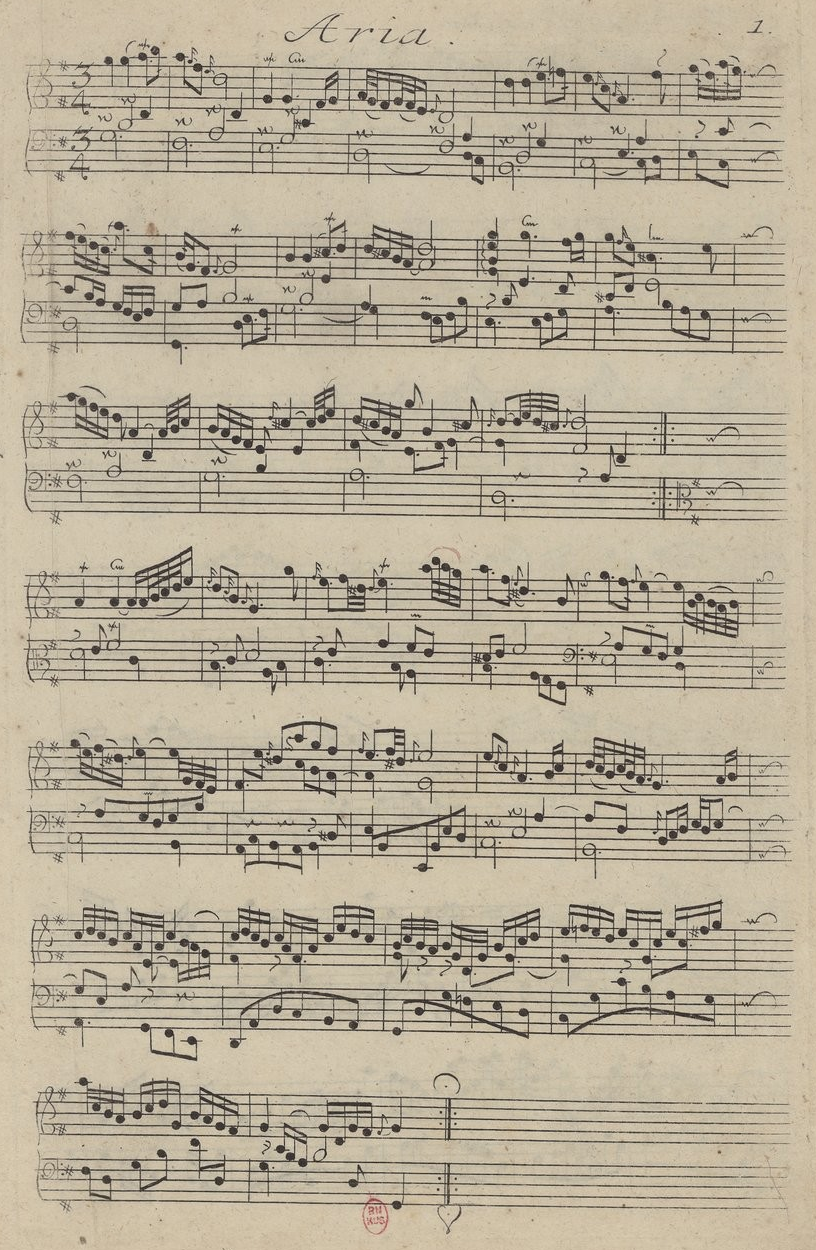
1. Pitch Chunks — Chords and Scale Patterns
C-E-G stops looking like three separate notes and starts looking like a single C-major triad. This is the first kind of chunk to develop. Scale fragments behave the same way: C-D-E-F-G becomes "an ascending C-major fifth," not five pitches.
Harmonic knowledge accelerates this growth. If you recognize the I-IV-V-I progression at sight, your eye stops decoding individual chord tones the moment you see the pattern. Without that knowledge, the same notes get re-decoded every time they appear.
2. Motor Chunks — Patterns Your Fingers Remember
Frequently encountered figures get stored in motor memory. A C-major broken triad (C-E-G-C) plays itself without conscious processing. This is the chunk that most directly reduces playing time, because it frees working memory from controlling individual fingers.
3. Visual Chunks — Patterns You Recognize by Shape
Notes on a staff are also visual objects. Shapes that appear often become familiar as shapes. An octave leap in the bass is recognized instantly as a vertical visual gap, not calculated as a pitch interval. The visual chunk skips the arithmetic.
Building Chunks — Where to Begin
The intuition that reading more slowly will make you more accurate produces the opposite result. Chunk learning stops (notes processed individually never get grouped), motor patterns break apart (movement automation requires continuous flow), and musical context disappears (chord and progression structure is invisible when each note stands alone — exactly why Sloboda's non-musicians performed so much worse).
Chunking is not something you can will into existence. But you can create conditions that make it grow faster.
- Slow tempo is fine — stopping is not. Read slowly if you must, but keep the flow continuous. As soon as two notes are processed inside the same beat, a chunk begins forming.
- Drill the common figures separately. Scales, arpeggios, and harmonic progressions like I-IV-V-I should live in your fingers and eyes already. When the score presents the same pattern, you retrieve a chunk instead of decoding pitches.
- Read more pieces, slightly below your level. Music that's too hard exhausts attention before chunks can form. Chunks emerge from repeated exposure to patterns, so breadth beats depth here.
- Encounter the same pattern in many contexts. Pitch, motor, and visual chunks all grow with exposure. Noteflex's staged exercises are designed so that the same note groupings reappear across different musical contexts, letting chunk formation accumulate without you having to plan it.
Back to That First Measure
Return to where we started. You touched three notes. "C. E. G." If those three pitches had registered as one C-major triad, you'd have touched once, not three times. Multiply that single saving across a measure (five times), a page (a hundred times), an entire piece — and you have the gap between a reader who decodes notes and a reader who processes patterns.
If you want to read scores faster, don't slow down further. Widen the unit. Two notes first, then three, then whole figures the moment a familiar harmony comes into view. Chunks grow only when notes are bundled. They never grow when notes are kept apart.