In 1945, Shinichi Suzuki started from a single observation: "Every Japanese child speaks Japanese by age five. No Japanese child plays the violin by age five. Why?"
His answer was simple. Learn music the way you learn language. No child learns their native language from a book. They listen and imitate.
That insight became the Suzuki method. Seventy years have passed.
The question still remains: Suzuki or traditional? Especially for sight-reading.
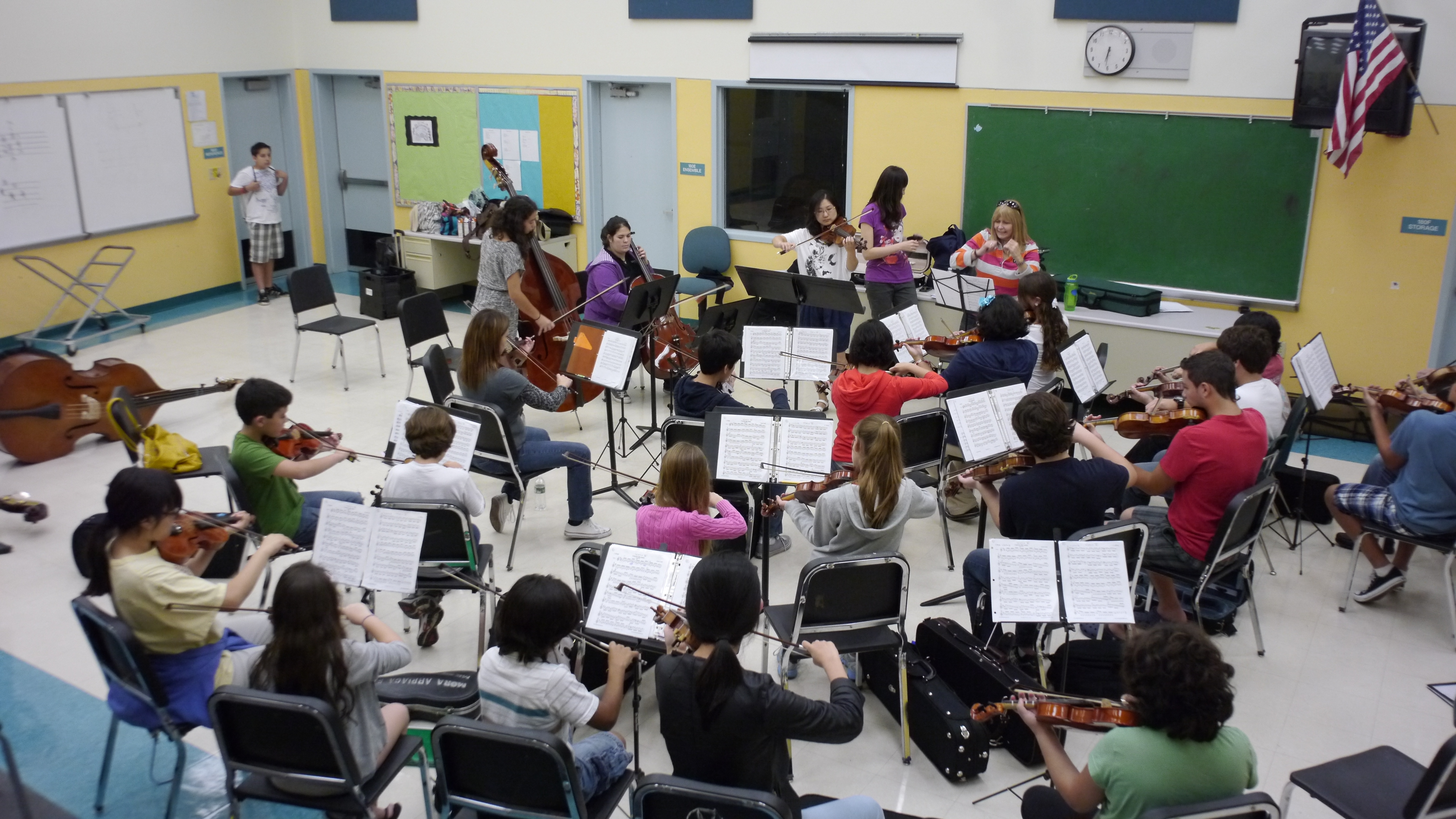 A music education setting. Source: Wikimedia Commons, Public Domain
Historical Roots
Traditional music education took shape in 18th and 19th century European conservatories. The core assumption: the score is the music. Students learn notation first. Notes, meter, rhythm — then instruments.
This model was standard for two centuries.
The Suzuki method spread in the 1950s and 60s. The core assumption: sound is the music. Students start by listening. They hear pieces dozens of times and imitate them. Notation comes much later.
The difference is not just ordering. The underlying philosophy of what music is differs.
Five Years Later — Two Students
A started Suzuki at age 5. Now 10. B started traditional at age 8. Now 13.
Both have five years of experience. Both play pieces at similar levels. Where do they differ?
A (Suzuki) — strengths:
- Strong intonation. Hears pitch accurately.
- Natural expression. Musical phrasing internalized.
- Plays well from memory.
- Quick to imitate new pieces by ear.
A — weaknesses:
- Hesitates when sight-reading new scores.
- Note recognition not fully automated.
- May lack theory or harmony knowledge.
B (traditional) — strengths:
- Strong sight-reading. Reads and plays new pieces.
- Fast note, rhythm, and accidental recognition.
- Natural harmonic analysis.
B — weaknesses:
- Expression can be mechanical. Plays what is written.
- Weaker memory playing. Anxious without score.
- Pitch perception may be weak.
These are generalizations. Individual students vary widely. But the average patterns hold.
What the Research Says
McPherson and Gabrielsson (2002) compared students from different pedagogical traditions. The key findings:
- Sight-reading correlates strongly with score exposure time. Students with early and abundant score reading sight-read better for life.
- Pitch and expression correlate with auditory imitation. More listening and copying — stronger ear and feel.
- Students strong in both did both.
In other words, Suzuki vs traditional is not a binary choice. It is about which side gets weighted.
The Modern Compromise — Eclectic Approach
Most current music education has settled on a hybrid. Commonly called the eclectic approach.
Ages 0–5: Listening-focused. Singing, rhythm games. Instruments minimal or absent.
Ages 5–8: Instrument begins. Suzuki-style listen-and-imitate. Note recognition introduced through games.
Ages 8+: Notation reading in earnest. Hearing and reading in parallel.
Ages 10+: Dedicated sight-reading practice. Harmonic analysis begins.
This staged introduction captures the benefits of both approaches.
What This Means for Adult Beginners
If an adult starts music for the first time, what does this comparison suggest?
Implication 1: Listen abundantly.
Adults usually start from the score. But pitch and expression begin in the ear. Before learning a new piece, listen to it 10+ times. Hear multiple interpretations if possible.
Implication 2: Try playing from memory.
The traditional approach tends to score-dependence. Once a week, play a short piece from memory. Even a brief one.
Implication 3: Sight-reading is a separate practice.
Separate practice time for repertoire from practice time for sight-reading. Sight-reading is a brief new piece read once a day.
This builds neither Suzuki nor traditional purity — but a personal balance.
Where Noteflex Sits
Noteflex is clearly a notation-based tool. It focuses on note recognition and pattern automation. Suzuki-style auditory training needs a different tool.
But there is one nuance worth highlighting. Noteflex does not teach notes individually. It teaches patterns. This is closer to how hearing actually works — the ear hears melodic and harmonic patterns, not isolated notes — than to traditional note-by-note instruction.
In that sense, Noteflex pursues a third path: visual pattern recognition. Neither pure Suzuki nor pure traditional, but pattern-based visual learning.
Conclusion
Which is better — Suzuki or traditional? The wrong question.
The right question: what is your weakness? Add the approach that addresses it.
Strong reader but weak ear? Add Suzuki elements. Strong ear but weak sight-reader? Add traditional methods (or a tool like Noteflex).
Suzuki was right seventy years ago. Music is like language. But language eventually requires literacy too. Being able to speak does not mean being able to read.
Music is the same. Both are needed.