Set a metronome to 60 and play the opening of «Twinkle Twinkle» one note at a time. Now set the metronome to 100 and play the same notes. The notes are identical. The music is not. One feels like a lullaby; the other feels like a march. Tempo markings are how a composer fixes that distinction on the page.
A tempo marking is more than a number of beats per minute. It also fixes the character that goes with the speed. The word Allegro carries "fast" and "cheerful" together — speed and mood encoded in a single Italian word at the top of the score.
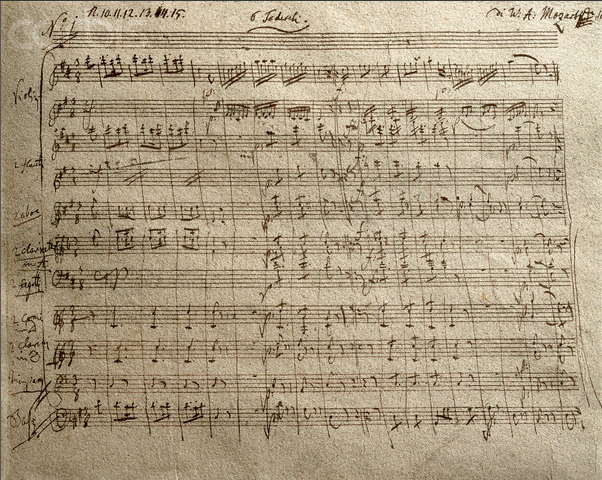
When Mozart wrote Adagio at the top of the «Prague» Symphony K.504, then Allegro a few systems later, he was not just specifying speed. He was telling the listener how the piece would open: a heavy, deliberate door, then a quicker room behind it. Two words at the top of a page can frame an entire movement.
What a Tempo Marking Actually Specifies
A tempo marking sits at the very top of a score — above the first staff system, or above the first bar of a new movement. Most are written in Italian, a convention that hardened in 17th- and 18th-century printed scores.
It works on two layers at once:
- Speed: a rough range of beats per minute (BPM).
- Character: how that speed should feel — bright, walking, weighty, agitated, sustained.
The same Allegro can become Allegro vivace (lively-fast) or Allegro ma non troppo (fast, but not too much) by adding a single qualifier. Tempo markings leave room for a performer to interpret the character. They are not the precise BPM specifications a click track gives a film scoring session.
Common Tempo Markings and Their BPM Ranges
The ranges below are typical guidelines. Edition, era, and performance tradition shift them, but for a learner reading a score for the first time, these numbers anchor the first instinct.
- Largo: very slow, broad. Around 40–60 BPM.
- Adagio: slow and calm. Around 66–76 BPM.
- Andante: at a walking pace. Around 76–108 BPM.
- Moderato: moderate. Around 108–120 BPM.
- Allegro: fast and cheerful. Around 120–168 BPM.
- Vivace: lively. Around 168–176 BPM.
- Presto: very fast. Around 168–200 BPM.
- Prestissimo: as fast as possible. Above 200 BPM.
The word Andante comes from the Italian verb andare, "to walk." Reading "walking pace" rather than "76 to 108" tends to give a more accurate first feel for the music. The same trick works for Largo (broad, spacious) or Presto (urgent, pressing).
When Qualifiers Are Added
Tempo markings combine with a small vocabulary of modifiers to sharpen the instruction.
- con brio: with spirit. (Allegro con brio — an energetic Allegro.)
- ma non troppo: but not too much. (Adagio ma non troppo — slow, but not dragging.)
- assai: very. (Allegro assai — a very fast Allegro.)
- molto: much, very. (Molto Allegro.)
- poco: a little. (Poco Adagio — leaning toward Adagio.)
- più / meno: more / less. (Più mosso — more motion.)
- sostenuto: sustained.

When Chopin wrote Maestoso (majestic) at the top of the «Heroic» Polonaise Op. 53, the marking is less about BPM and more about identity. Two polonaises by different composers can sit at the same tempo on a metronome and still be miles apart in character, because one is labeled Allegro and the other Maestoso.
When a Metronome Number Sits Next to the Marking
From the 19th century on, printed scores often place an explicit metronome number (for example ♩ = 120) next to the tempo marking. When that number is there, it is the primary reference. The Italian word becomes the secondary instruction — how to color that BPM.
Older scores, including much of the Baroque and early Classical repertoire, carry no metronome number. The Italian word alone supplies both speed and character. The BPM ranges above are not precise readings from those scores; they are conventional agreements built up across centuries of performance.
Look at the two words at the top of the page again. Adagio. Allegro. The metronome is already inside them. A single line of ink at the top of a sheet of music sets the identity of every note that follows.